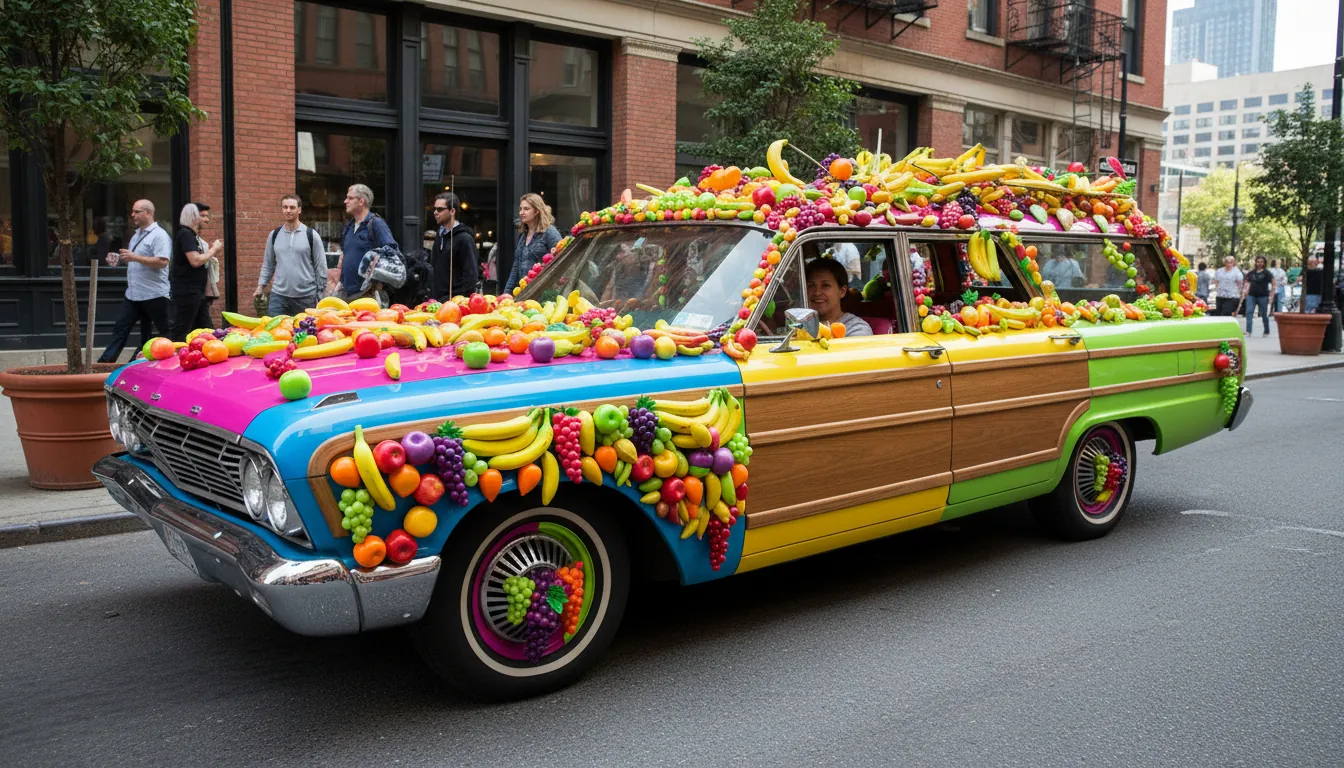
A 1967 Ford station wagon does not sound like the beginning of a global art movement. Yet that humble vehicle, donated to the Orange Show Foundation in Houston in 1984, became the seed of something far larger than anyone expected. Artist Jackie Harris covered it with roughly eight hundred dollars worth of paint and plastic fruit. The result was the Fruitmobile, a rolling still life that six local art lovers bought and gave back to the Foundation. That single act of generosity set a pattern for a culture built on shared ownership, public display and cheerful irreverence.
The same year, curator Ann Harithas organised Collision at Lawndale Art Center, putting art cars in front of a gallery audience for perhaps the first time in the city. Soon those vehicles began appearing on Houston streets, exactly where the Orange Show believed art belonged. Public, unexpected and accessible to everyone became the movement’s quiet manifesto. What followed was not a tidy exhibition but a parade, a festival and eventually a tradition that now draws more than 315,000 spectators each year.
Early Sparks Before the Parade
Long before Houston embraced the art car, artists were already treating automobiles as canvases. In 1925, Sonia Delaunay painted a Citroen B12 with bold geometric shapes, blending her abstract textile designs with the machine age. Her car was not a protest or a joke. It was a serious experiment in applying colour theory to a moving object, and it remains one of the earliest documented examples of the form.
The counterculture of the late 1960s gave the idea a different energy. Hippie-themed Volkswagen vans appeared on American roads with hand-painted flowers, peace signs and swirling patterns. The Merry Pranksters took the impulse further with Furthur, a decorated school bus that became a travelling symbol of communal creativity. Meanwhile, the lowrider tradition, rooted in Chicano communities, was refining custom paint and hydraulic engineering into a distinct automotive art language. The Chicano Art Movement of the 1960s and 1970s brought lowrider aesthetics to wider attention, as artists applied intricate pinstriping, murals and metal flake finishes to cars that could dip and rise on command.
Houston Builds a Rolling Museum
In 1986, artists Rachel Hecker and Trish Herrera organised a New Music Parade in conjunction with the New Music America Festival. Twenty art cars and floats travelled down Montrose Boulevard to the dedication of the Museum of Fine Arts Houston sculpture garden. The sight of painted vehicles moving through a formal cultural occasion felt new and slightly mischievous. Months later, Susanne Demchak brought the celebration home to the Orange Show with a Road Show featuring eleven art cars, lowrider demonstrations and children’s art bike workshops.
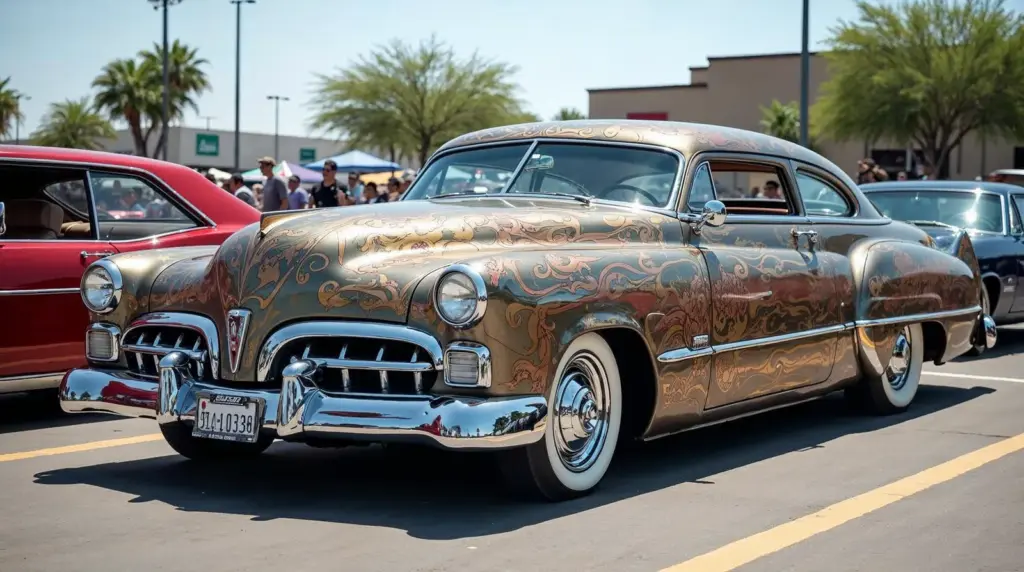
More than 1,400 Houstonians attended that Road Show, along with national media. The Orange Show had become the driving force behind an emerging movement, and the city was paying attention. In 1987, the Houston International Festival invited the Orange Show to create something entirely new. The result was Roadside Attractions: The Art Car Parade, which debuted in April 1988 with forty wildly imaginative vehicles and an estimated crowd of 2,000.
The Parade Finds Its Stride
Here was a parade devoted exclusively to art cars, a public procession that treated the street as a gallery without walls. The parade grew quickly, fuelled by Houston’s diversity, scale and fearless individuality. Each year brought more vehicles, more spectators and more artists willing to spend months gluing, welding and painting. The Orange Show Center for Visionary Art guided the event as it became one of the city’s most iconic homegrown traditions. Nearly four decades later, it remains Houston’s biggest free cultural event.
Defining the Art Car
An art car is not simply a painted vehicle. The artist creates a design by adding or subtracting materials, or by renovating an earlier model to revive a beauty and style that once was. The end result conveys new meaning through design, mechanical or structural changes, renovation, or the addition of new images, symbols and other elements. The range is enormous, from imaginatively painted sedans to extravagant fantasies that barely resemble cars at all. Harrod Blank, who published two books on the subject, helped formalise this understanding.
His works Wild Wheels and Art Cars: the cars, the artists, the obsession, the craft documented a subculture that had long existed outside gallery walls. Blank also co-founded Art Car Fest with Philo Northrup in the San Francisco Bay Area, the second largest art car festival in the United States. His writing gave the movement a shared vocabulary and a sense of its own history. Art cars are an expression of the artistic need to create, and inspiration often comes from popular culture or from a desire to express individual ideas and visions.
Common Threads Across the Movement
Some artists build elaborate sculptures on wheels. Others strip a car down to its frame and rebuild it as something stranger. The common thread is not style but intention, a decision to treat the vehicle as a medium rather than a possession. The culture that was once strongest throughout Texas and the Southeast now extends throughout the United States and beyond. Events showcasing art cars can be found in many major cities and small towns. The following elements recur across the movement’s history and geography:
- Paint as primary surface, from simple colour fields to complex murals and geometric patterns.
- Found objects attached to the body, including plastic fruit, toys, bottle caps and household items.
- Structural alteration, such as raised suspensions, extended frames or removed body panels.
- Renovation of older models to celebrate a particular era of automotive design.
- Mechanical modification that changes how the car moves, sits or sounds.
- Community participation, with artists often working in public or inviting help from neighbours.
- Festival display, where the finished car appears in parades, meets and open-air gatherings.
Each of these elements can appear alone or in combination. What matters is that the car stops being ordinary transport and starts being a statement. The statement may be funny, nostalgic or purely visual. The vehicle carries it into traffic, where anyone can see it.
Racing Meets the Gallery
The most prolific art cars in the world are BMW’s, a series that began when French racing driver Herve Poulain had an idea in 1975. He asked an artist to design a racing car, and no one could have predicted what followed. BMW commissioned major artists to paint its competition machines, turning endurance racers into high-speed canvases. The project continues today, with each car becoming both a racing vehicle and a collectable artwork.
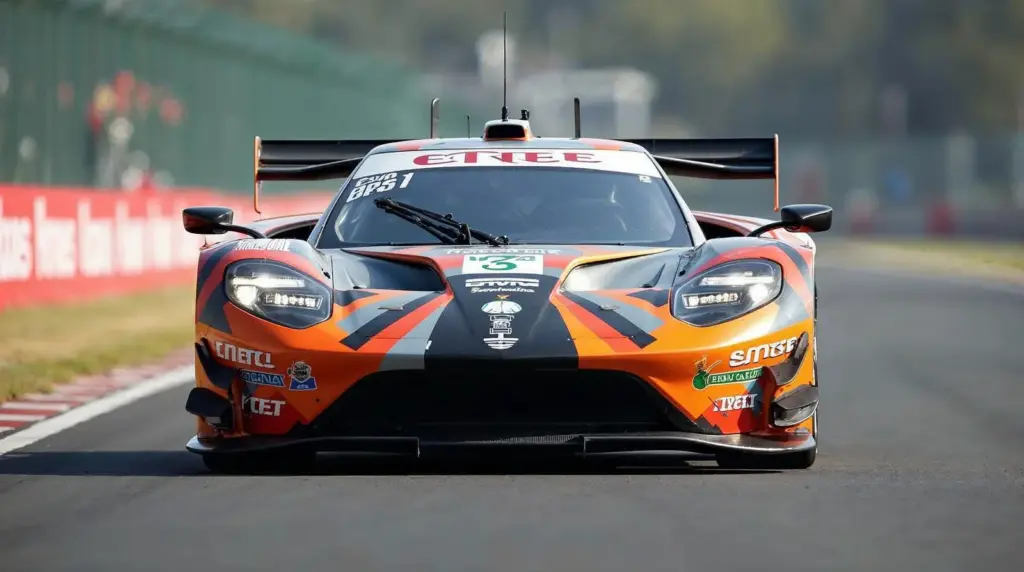
These BMW art cars occupy a different space from the Houston parade vehicles. They are corporate commissions, executed by famous names and displayed in museums as well as on circuits. Yet they share the same fundamental gesture. A car, an object built for function, becomes a surface for vision. The speed adds a new dimension, because the artwork is only fully seen when it is moving.
The Craft of a Clean Wrap
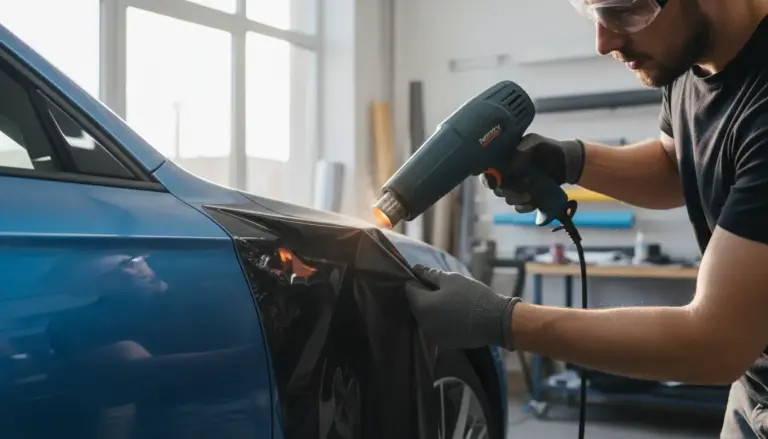
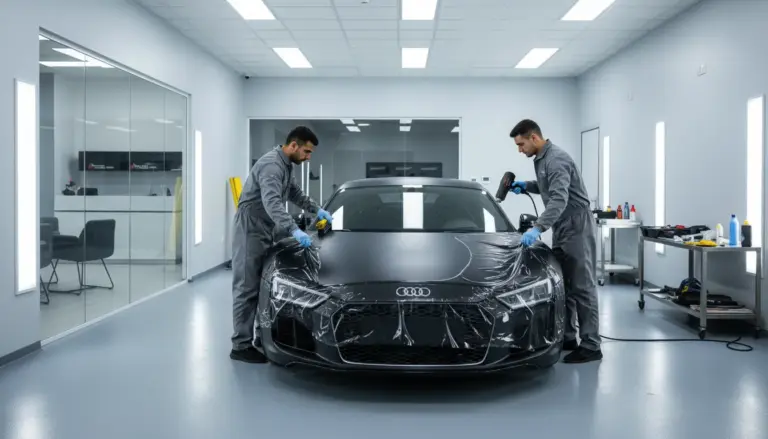
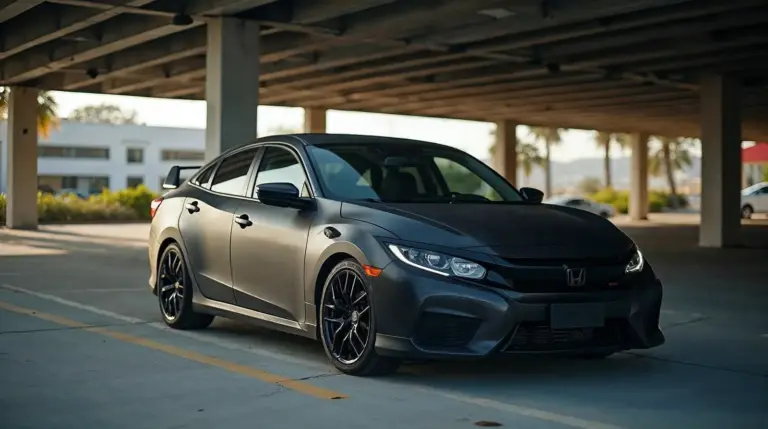
Not every custom vehicle is a wild sculpture. The craft of a clean wrap belongs to the same conversation, even when the result looks restrained. A vinyl wrap can transform a car’s colour, texture and finish without permanent alteration. The best wraps require precise measurement, careful surface preparation and patient application. A clean edge matters as much as a bold image, because the wrap is a skin that must fit the body perfectly.
Wraps appeal to drivers who want personal expression with the option of removal. They also serve commercial purposes, turning fleet vehicles into moving advertisements. The discipline is less romantic than gluing toys to a station wagon, but it shares the same core idea. The car is a surface, and the surface is a message. If you are drawn to art cars, start by deciding what you want the vehicle to say.
Choosing a Direction for Your Own Car
A full sculptural build demands time, space and a tolerance for public attention. A painted design is simpler but still permanent. A wrap offers flexibility and a professional finish. Each path has its own craft, and each rewards patience. Look at examples before you commit. Attend a local car meet, study photographs from Houston’s parade or visit a wrap studio to see work in progress.
Talk to artists and installers about materials, durability and cost. The movement has always been about generosity and experimentation, so do not be afraid to ask questions. Those roots were democratic and often homemade. The BMW programme brought institutional weight and international visibility. Between these poles, the art car has become popular throughout the world. The car you drive can become the art you live with, and the road can be your gallery.