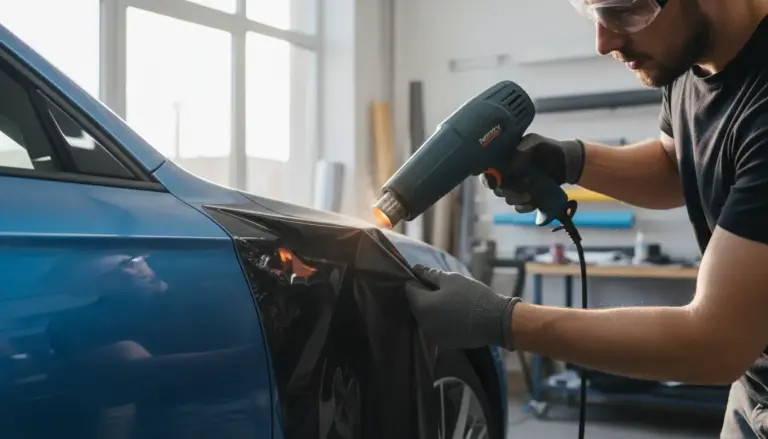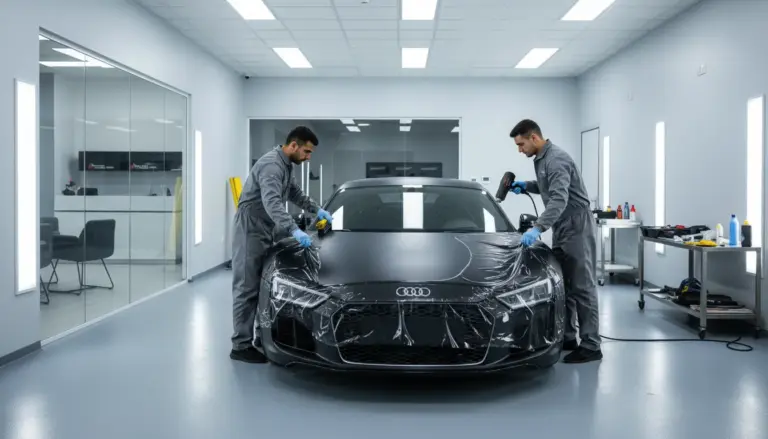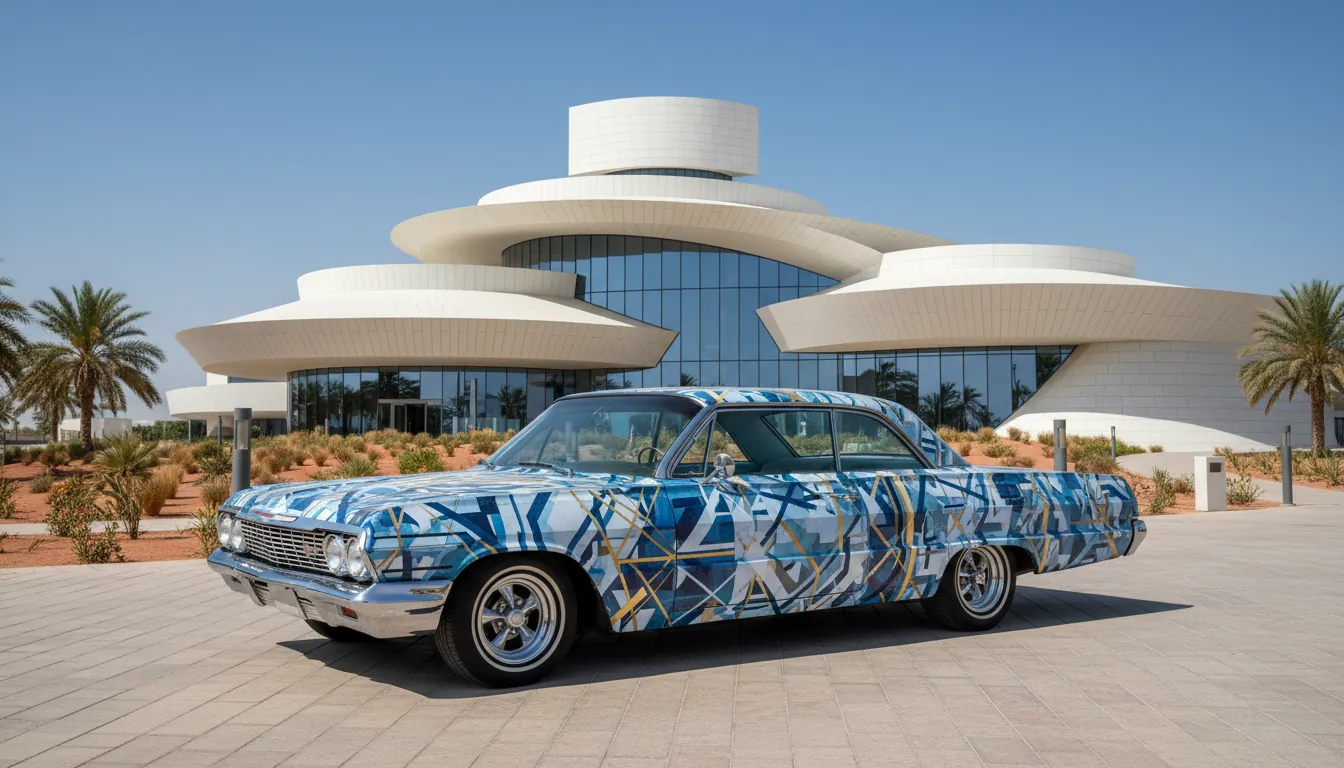
The car has always been more than transport in the Gulf. It is a family heirloom, a Friday cruise companion, a machine that connects desert towns to corniche promenades. When that machine receives a hand-painted mural or a precision vinyl wrap, it stops being a vehicle and becomes a moving gallery. The region already understands this instinct. Doha has a dedicated Car Museum filled with classics, while public art rules make clear that not every surface is open for expression.
Yet art cars occupy a strange middle space. They are not quite museum objects, not quite everyday traffic. A wrapped saloon outside a gallery opening can draw the same attention as a sculpture in a courtyard. The difference is that the car must still pass inspection, cross a border or park without violating signage. Understanding that balance is what separates a memorable piece from an expensive mistake.
From Collection Halls to Street Corners
The Sheikh Faisal Bin Qassim Al Thani Museum opened its Car Museum in Al Shahaniya, northwest of Doha, as an extension of a much larger cultural landmark. Around 300 classic cars sit within a collection that also includes Islamic art, Qatar heritage pieces and international artefacts. Visitors can follow more than 120 years of motorised development, from a 1908 Studebaker and a 1924 Ford T Roadster to a 1958 Cadillac and a 1968 Ford Mustang. The space frames the car as a record of human connection across the Arabian Peninsula.
The step from museum piece to street corner changes the conversation. A museum car can be fragile and original. An art car needs to survive a summer afternoon in Doha, a sandstorm near Al Shahaniya or a slow queue at a border post. Wrappers and painters in the region learn to think about UV damage, panel gaps and the way a design reads from three lanes away. The best Gulf art cars work at speed and at standstill.
Public Art Rules and the Wrapped Car
An art car occupies a different category because the artwork is the vehicle itself. The owner carries permission in the registration and the wrap. What the owner cannot do is treat a public artwork, a museum lawn or a pedestrian plaza as a parking backdrop. A wrapped car parked illegally in front of a sculpture may look striking in a photograph, but it can also trigger fines and create a poor impression of the car art community. The cleanest statement respects the site.
Crossing Gulf Borders with a Wrapped Vehicle
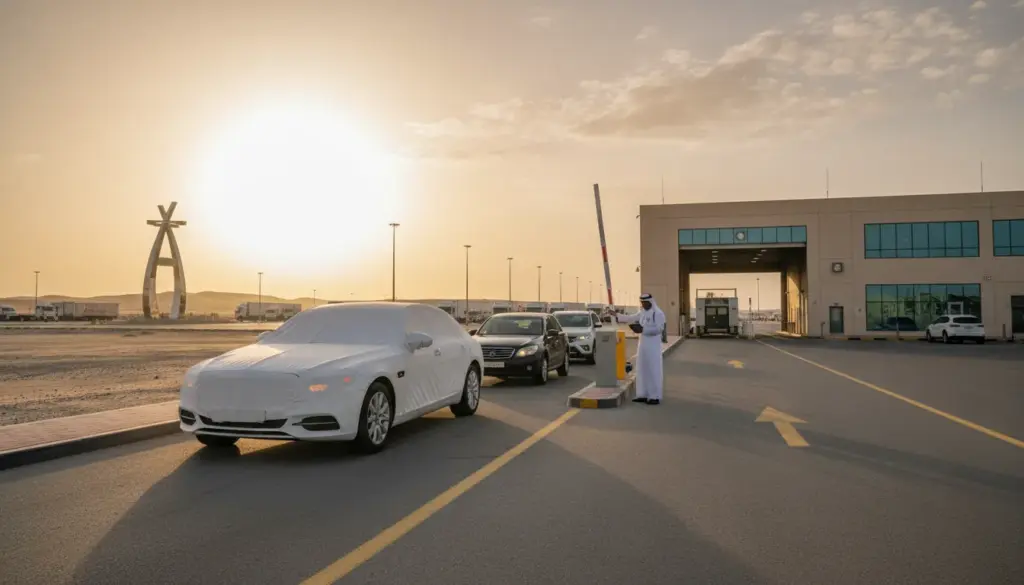
A Gulf art car rarely stays in one country. Collectors drive between Doha, Riyadh, Dubai and Kuwait City for events, gatherings and private viewings. Each border introduces questions about paperwork, inspections and the legal status of a vehicle whose colour no longer matches its original registration. The Gulf Cooperation Council represents one of the fastest-growing art markets, but shipping and driving art between member states still requires careful preparation.
Customs rules vary sharply across the region. The United Arab Emirates applies a 5 percent import duty on permanent art imports plus 5 percent VAT, while Saudi Arabia charges 5 percent duty with 15 percent VAT. Qatar maintains 5 percent duty with no VAT currently, making it a cost-effective destination for permanent imports. Kuwait follows the standard 5 percent duty with no VAT but does not yet participate in ATA Carnet systems. A temporary exhibition car may face different treatment from a vehicle crossing for personal use.
ATA Carnets simplify temporary imports by allowing movement without upfront payments. The UAE pioneered adoption in 2011, Saudi Arabia announced implementation in June 2024, and Qatar has accepted carnets since August 2018. Kuwait still requires deposit-based temporary admissions. For an art car owner, the practical lesson is to confirm current categories with the relevant chamber or customs authority before departure. Documentation should match the vehicle exactly, including any changed colour or livery.
What to Prepare Before a Cross-Border Drive
A wrapped car crossing a Gulf border needs more than a full tank and a playlist. The paperwork should tell the same story as the vehicle. Any mismatch between the registered colour and the visible wrap can slow inspection or raise questions. Owners who plan ahead tend to move through checkpoints with fewer delays.
- Carry the vehicle registration, owner identification and any customs approval in printed form, even when digital copies exist.
- Confirm whether the destination country requires an ATA Carnet or a deposit-based temporary admission for the specific vehicle category.
- Photograph the car from all four sides before departure, showing the wrap, number plates and any identifying details.
- Check that the wrap does not obscure lights, indicators, mirrors or number plates, since this can create a safety issue at inspection.
- Keep a written description of the livery and materials in case an officer asks for clarification about the changed appearance.
- Contact the relevant chamber of commerce or customs authority in advance to confirm current procedures for temporary vehicle entry.
Why the Wrap Itself Must Be Road-Legal
A wrap that wins a design contest can still fail a roadside check. Gulf traffic rules generally require clear visibility through glass, unobstructed lights and legible number plates. A design that flows across the headlamps or covers a side mirror may look dramatic in a studio shot but create genuine safety problems on the road. The best wrappers leave functional zones untouched.
The legal question extends to content as well. Artwork that is acceptable in one country may face review in another. Saudi Arabia applies strict cultural content review, while Qatar Museums Authority oversees cultural property imports. A design that references sensitive symbols or text can cause delays even when the owner sees it as pure decoration. Keeping the livery abstract or clearly personal reduces the chance of misunderstanding.
Car Meets, Contests and the New Gulf Aesthetic
The Gulf art car scene has grown beyond museum walls. Owners gather in organised car meets where wraps are judged on line work, colour choice and overall impact. Some events focus on classic cars, others on modern saloons and SUVs with full colour changes. The common thread is a respect for the vehicle as a complete object, not just a canvas. A poorly finished edge can undo a brilliant concept.
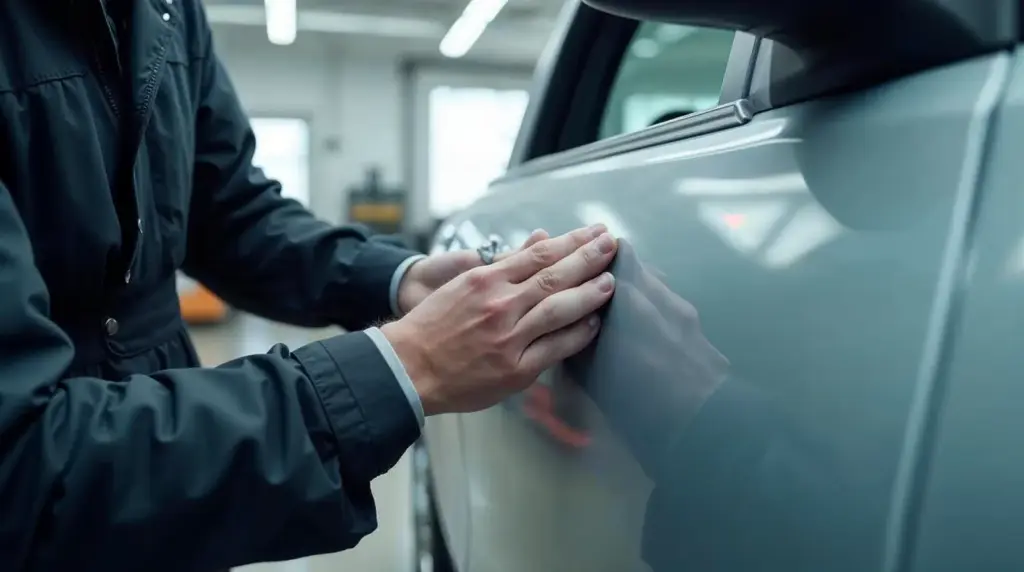
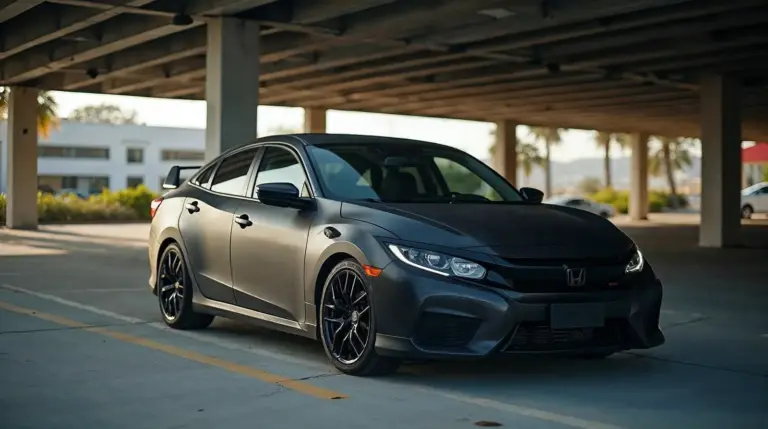
The aesthetic itself is evolving. Early Gulf wraps often leaned on chrome and loud graphics. Today the scene includes matte finishes, geometric patterns, calligraphy-inspired forms and subtle colour shifts that only appear under certain light. The car remains a status object, but it is also becoming a personal signature. In that sense, the art car is a natural extension of a culture that already treats the automobile with unusual care.
Where Museum Discipline Meets Street Practice
The Car Museum in Al Shahaniya and a Doha car meet may seem like different worlds, but they share a common language. Both value rarity, condition and the story behind a machine. The museum preserves a 1924 Ford T Roadster under controlled conditions. A wrapped modern car preserves its owner’s taste under far less forgiving conditions. Each approach teaches the other something useful.
The result is a scene that can move from a museum courtyard to a border checkpoint without losing its character. It understands that a clean wrap is a craft, that a public artwork deserves distance, and that a customs officer deserves clear paperwork. Art cars may begin as personal statements, but in the Gulf they end up as small acts of cultural diplomacy. The road is long, the heat is real, and the finish should always be clean.